The Trustees are delighted to announce that we have secured grant funding from The National Lottery Heritage Fund (£33,888), Historic Environment Scotland (£16,194.08) and The Pilgrim Trust (£5,000) to cover the cost of the urgent repair work on the old mill. We wish to thank all three funders for supporting our project.
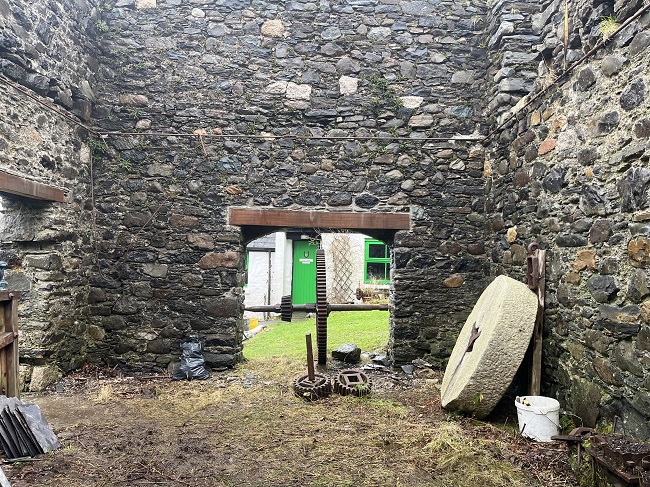
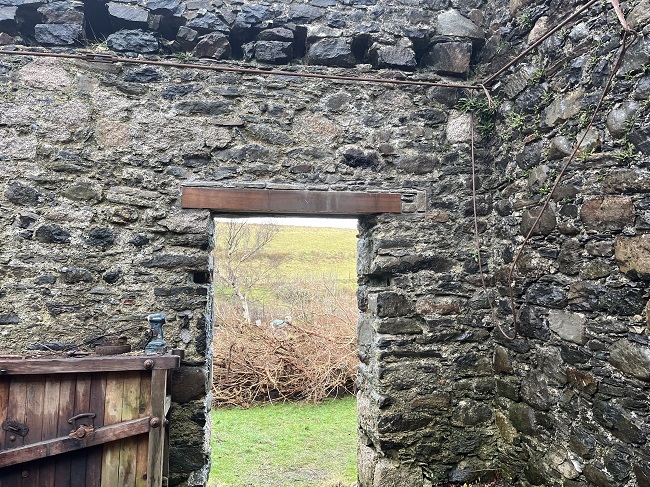
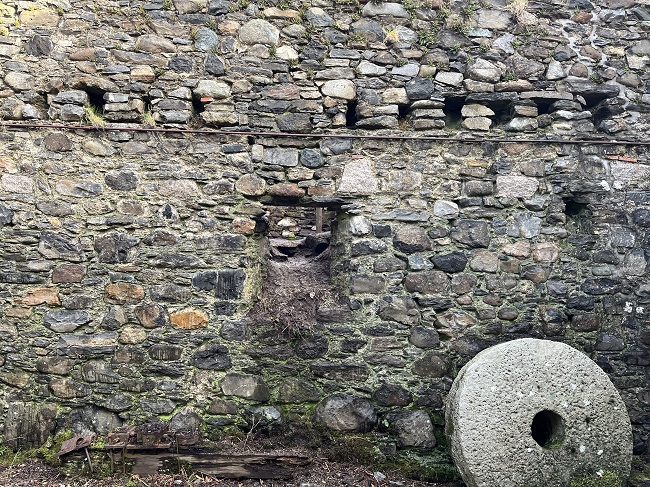
Krystyna Pyatsz, the architect who drew up the original survey and the Professional Advisor for the work, was very keen that we get the urgent work completed before the winter to avoid further deterioration of the ruins, so she had lined up contractors ready to start as soon as we had authorisation from HES and the Heritage Fund. So, on November 27th, within days of receiving the ‘Permission to Start’, the contractors had turned up and were busy getting on with the work. They worked steadily through the weekend and had all the urgent work completed in 5 days. In addition, they procured and installed an extra lintel over the window to replace one that was showing early signs of rot and did additional pointing and consolidation of some of the stonework. (Photos 1, 2 & 3 below)
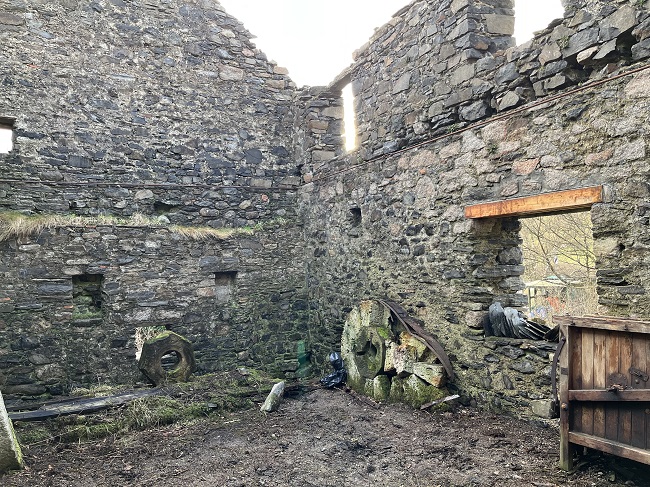
Trustees and volunteers had done some clearing of the main mill prior to the work starting and the contractors completed cutting back all the shrubs and trees that had grown up out of the stonework, so that for the first time for a long while, it is now possible to really see the detail of the ruins and start to imagine how the machinery would have been placed and how it would have looked when it was in last in operation 110 years ago. (Photo 4 below)
Interesting discoveries in the drying kiln building
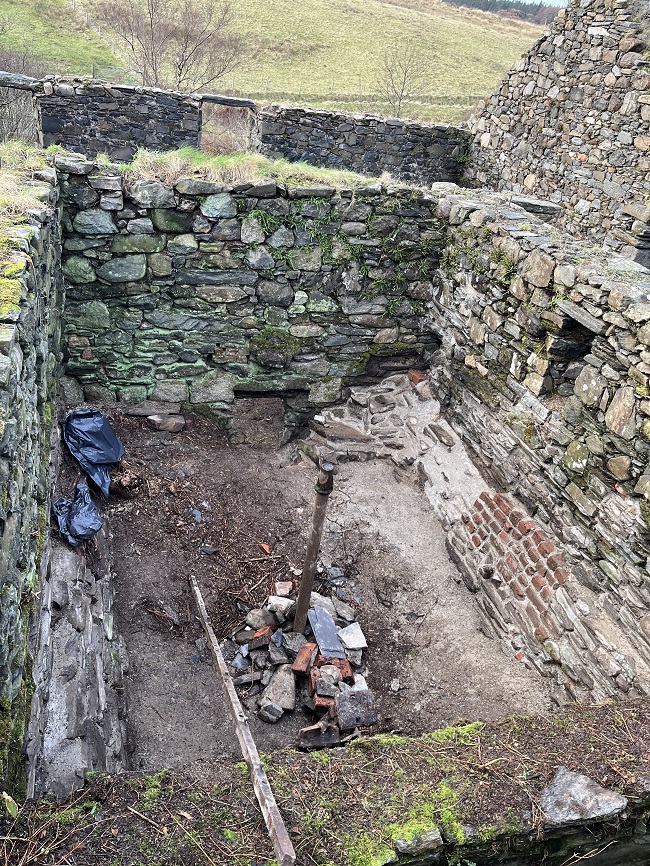
The mill consists of two buildings - the main mill that would have had the waterwheel on the outside and then inside, all the machinery linking the wheel with the mill stones. At right angles to the main mill building is the structure that housed the drying kiln. This was where the grain (mostly oats in the case of this mill) would have been spread out and dried. The dry oats would have most likely been shoveled through the connecting opening into the main mill building to be ground. (Photo 5 below) Just as with the main mill building, the drying kiln building had lost its first floor along with the roof. The bottom floor of the drying kiln was full of debris and vegetation. Krystyna and the contractors spent some time digging out the debris and unearthing the base of the walls. In the process they discovered what they believe to be brick and stone ducting that ran around the inside of the base of the walls. The ducting would have carried the hot air from the kiln fire which was probably lit right below the floor at one end. The hot air would have warmed the brick and stones of the duct and then this heat radiated out into the drying space. The grain would have been spread out on the first floor, which would likely have been made up of perforated tiles supported by iron or possibly wood girders. The warm air would have risen through the perforated floor drying the grain and then exiting via the openings at the top of the outer walls. Krystyna was particularly excited about discovering patches of old brick and the original clay mortar in the ducting wall. She believes that these were repairs done to the ducting probably at the end of the 19th century. (Photo 6 below) In the centre of the drying kiln is a metal post that extends up from the bottom floor to above where the first floor would have been. We haven’t yet been able to figure out what this was for - any suggestions gratefully received!
We would like to secure further funding so we can complete the repair work next year. In Krystyna’s original survey report she divided the work into urgent (the work just completed) and essential work which is necessary but not so urgent. This mostly involves securing the wall heads which will require scaffolding. Krystyna is optimistic that it will not be a huge job and that, if we can get funding, could be done in the early spring of next year. The Trustees would like to achieve that if at all possible and so will start fundraising once again right away.
In the meantime, there are still some jobs that we have to complete as part of the initial funding. These are researching and designing interpretation boards, building a path to the mill from the Centre and landscaping the area around the mill. Most of this work we hope we can carry out during the rest of this winter.
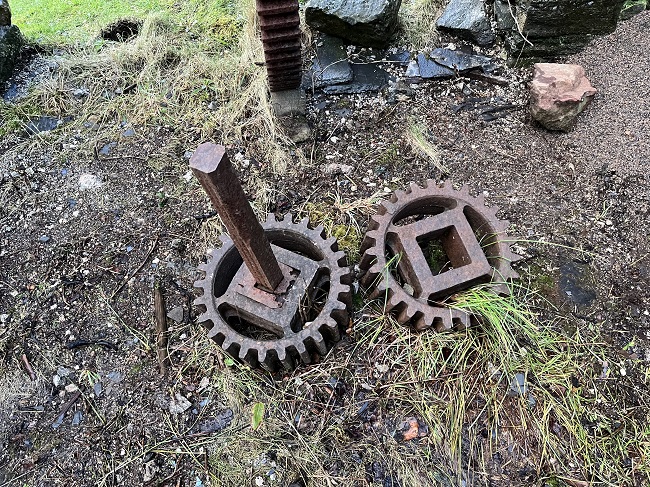
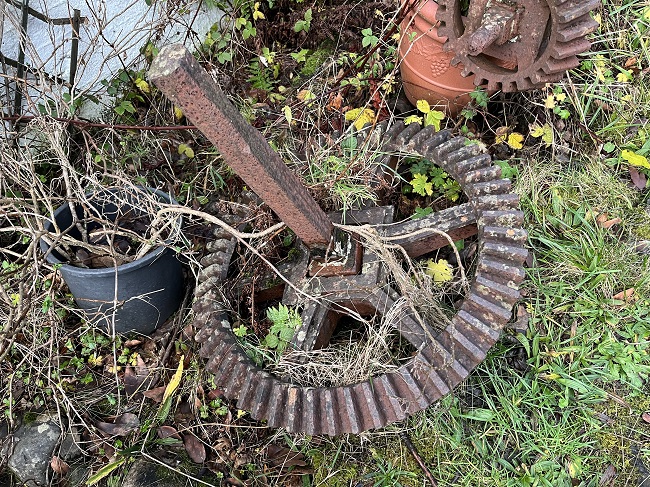
The interpretation boards are to go around the mill explaining its history and illustrating how it would have looked and worked. There is quite a bit of work to do researching this since there is little in the records we have that describe how the mill looked inside and worked. Hopefully we can find information for other similar mills and then use a bit of imagination, detective work and some reasoned guesses to come up with a plausible description of our mill. There are some bits of machinery still around including three millstones that you can see in some of the photos however, a lot of the metal machinery along with the water wheel itself and interior pit wheel was sold for scrap early in the last century. (Photos 7, 8 & 9 below) We invite anyone with knowledge of mill machinery and drying kilns to get in touch.
By the spring when we re-open, we are optimistic that all this initial work will have been completed and visitors will be able to walk around the inside of the mill imagining it fully operational once again.
Photos below run 1-9 left to right, or top to bottom if viewing on a phone



The Ross of Mull is an extraordinary microcosm of all that draws visitors to the Hebridean Islands. The scenery, as you travel along the single-track road from the ferry at Craignure is breath-taking. You experience in the many walks in the area a true sense of wilderness; the secret bays with their beaches of silvery sand, the abundance of wildlife and the innumerable marks on the landscape of the lives of past generations and communities long gone. The Ross of Mull is a compelling place for anyone fascinated by history and the ancient way of life of the Gaelic people.
By Phone: 01681 700659 By Email: enquiries@romhc.org.uk
Our museum is now closed for the Winter (except for Tuesday afternoons between 1-4pm) - reopening fully in Spring 2026.